1982 — 2027
Forty-Five Years
Compiled from the Bunbury Runners Club archive by race president Ian Gibbs, who has finished this event twenty-two times.
14
Starters in the first marathon
10,000+
Runners since 1982
290,000
Kilometres run and walked
22
Most finishes by one person
01
1982–1991
The first ten — 59 in the marathon by 1991
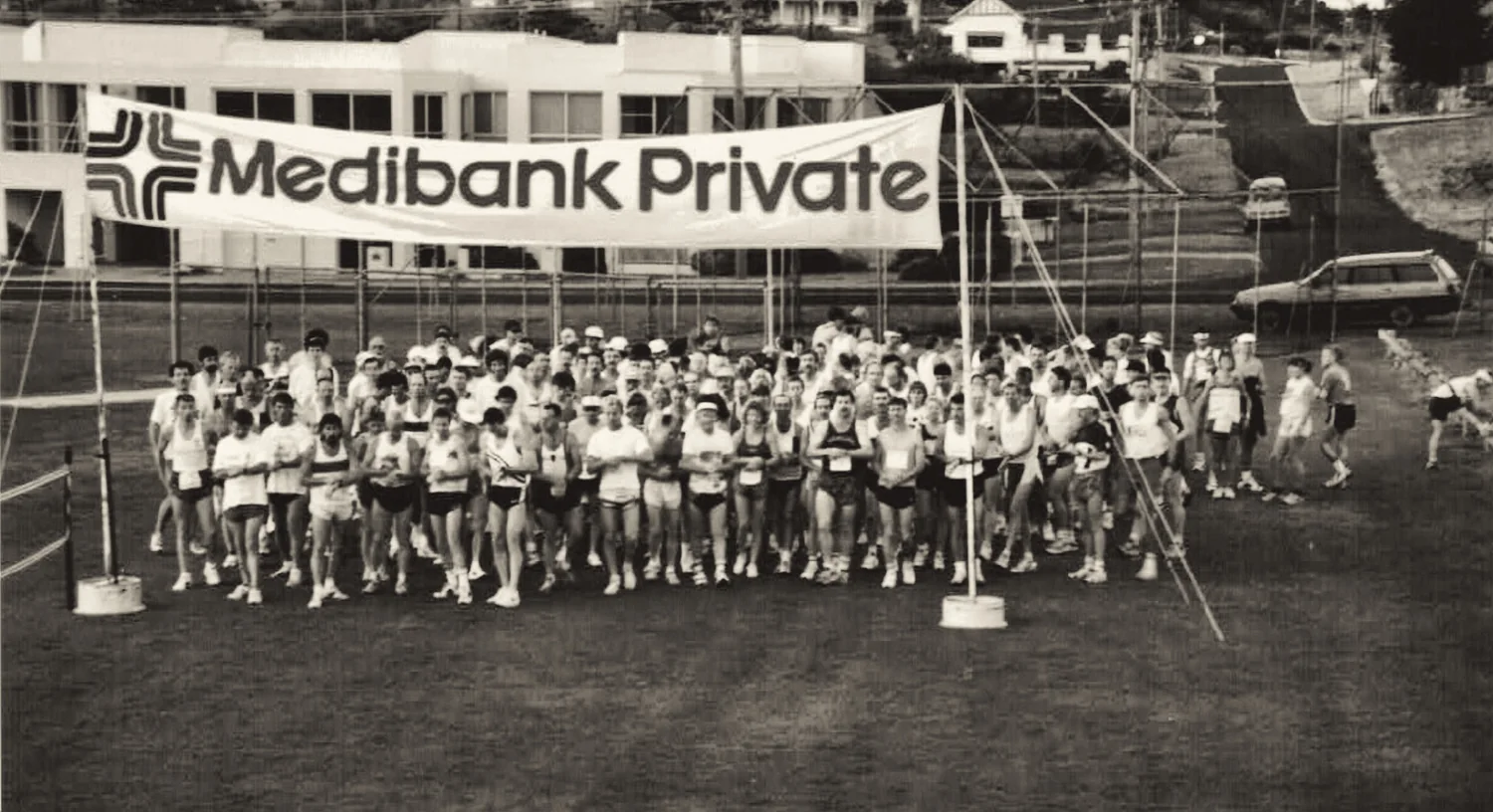
1982Fourteen people start the first Bunbury Marathon. Two are women. Entry is five dollars, with three dollars more for the luncheon. Peter Ritson wins in 2:34:38; Val Pach is first woman home in 3:58:50. Twenty-two run the half. The event is founded by the distance runners of the Bunbury Amateur Athletic Club, led by club icon and life member Henk Stoffers.
1982The first half-marathon winner is recorded under the wrong name. John Collingridge appears in the official results as "Colin Bridge". Ten-year-old Frank Stoffers finishes the half in 2:11:48.
1983The race starts in Queen's Gardens with 56 in the marathon and 66 in the half. Peter Ritson wins again in 2:28:41. Twenty-seven runners break three hours. Eighteen women compete — the press notes a trend beginning.
1984Tessa Brockwell runs 2:50:03. It will take thirty-seven years for anyone to match it, and nobody has beaten it yet.
1985David Eltringham runs 2:24:17. Forty-one years and roughly ten thousand runners later, it still stands as the course record.
1986Medibank Private signs on and stays for fourteen years. One of eight conditions is that the event be called the Medibank Private Bunbury Marathon in all publicity. The course is marked, a lead car runs, and St John Ambulance is given a hundred dollars for their trouble.
1987Race directors Don Mason and Dennis Devereaux ask for sixty helpers, with a post-race barbecue as the incentive. Every marshal role is written up by hand, with carbon copies.
1988313 runners, ideal conditions, and the lead truck is replaced by a lead cyclist — there are places a truck cannot go. Organisers discover days beforehand that a mock road accident has been scheduled on the course, and successfully have it moved.
1989John Hambelton runs 1:08:59 for the half. It will stand as the record for thirty-six years.
1989John Gilmore sets a world record here. 1:21:41 for the half marathon in the 70–74 age group — a world best, run on this course, by a man in his seventies.
1991Henk Stoffers, Cliff Young and John Gilmore, in one photograph, in Bunbury. The man who started this race, the potato farmer who shuffled his way into Australian folklore, and a world record holder — all three of them here, on the same weekend.
1990–91Karen Gobby begins a run of half-marathon wins that will end with four course records to her name, including 1:16:01 in 1991 — still unbeaten.
02
1992–2001
The next decade — 54 in the marathon by 2001
1994Runners from Setagaya, Bunbury's sister city in Japan, race here. Race director Brian Kennedy's idea. They are billeted with local families, collected from Perth on the Friday and driven back on the Monday. Thirty years on, this is still how it works. The same year, the club hosts the WA State Open and Country Marathon Titles and the race starts from its own clubrooms on Ocean Drive for the first time.
1998The course is re-measured and certified with Athletics Australia. Separate start times are introduced so there is always another runner in sight. Entries rise, which Ian Gibbs attributes partly to promotion on this new thing called the internet.
1999Don Lang finds the race on the internet and flies in for his 297th marathon. He had run one in every American state, a marathon a week across seventeen countries, and was listed as the most prolific marathon runner in the world. For his Western Australian one he chose Bunbury. He was sixty-five. Medibank Private and the club gave him a gift for putting the event on a map it had never been on.
03
2002–2011
The third decade — 94 in the marathon by 2011, and the 3 Waters name
2003The cup years. Record local sponsorship. What finishers took home was an engraved cup or glass rather than a medal — the thing the 45th is bringing back. The committee begins wrestling with a new problem: runners now expect a unique memento every year, and designing the shirt and medal has become a job of its own.
2006The best-supported year yet — $13,640 across cash, product and services. First national magazine coverage. Timing chips and water sachets introduced. A local band called Sway plays the finish. The race report describes the course as being "right on the coast, where the land, ocean and sky all meet as one".
2011Thirtieth year. The club coins the "3 Waters" name and draws a new course. Over 400 participants. A bronze medal is cast, coloured by distance. Fuji Nobuyki and Kazushi Eusebio, visiting from Setagaya, finish first and second.
04
2012–2021
Decade four — 170 in the marathon by 2021, one year lost
2016–19HBF becomes major sponsor. The half-marathon field grows every year, with female participation growing fastest. The 10K and 5K become genuine family events.
2020Cancelled. Everything was in place — planning, sponsorship, facilities. The only year in forty-five that the race did not run.
2021Astrid Feyer Roberts runs 2:50:03 — Tessa Brockwell's time from 1984, to the second, thirty-seven years later. On a wet day, on a course redrawn twice in between. The same morning, Dennis Devereaux — involved in this race since the late 1980s — becomes the first wheelchair athlete to complete the course, on a spare chair, after a puncture, up the lighthouse hill. Vlad Ixel sets a 50km record of 3:09:04. Access to the Koombana foreshore is cut off in the final week; a ramp is built and the race goes ahead.
05
2022–2027
Now — 229 in the marathon, sold out, and the 45th ahead
2022The fortieth year, postponed from April to August. Nine hundred entries across five distances. From fourteen runners in 1982 to a thousand on the line.
2024–25The marathon field grows 64% then 15%. The half climbs to 397 finishers. The 18–29 age group starts rising faster than any other.
And in 2025, Dean Menzies runs 1:07:28 for the half — breaking John Hambelton's 1989 record after thirty-six years, by ninety-one seconds.
And in 2025, Dean Menzies runs 1:07:28 for the half — breaking John Hambelton's 1989 record after thirty-six years, by ninety-one seconds.
2026The 44th year. The marathon sells out at its 300 cap. 229 finish the marathon and 418 the half — both records for the modern era. Liam Kamudu and Anna Watts win the marathon; Vlad Ixel and Astrid Roberts win the half. For the first time, 18–29 is the largest age group in the marathon field.
2027The 45th year. Sunday 11 April. Entries open 1 October 2026.
From the archive
Forty-five years of paper and film
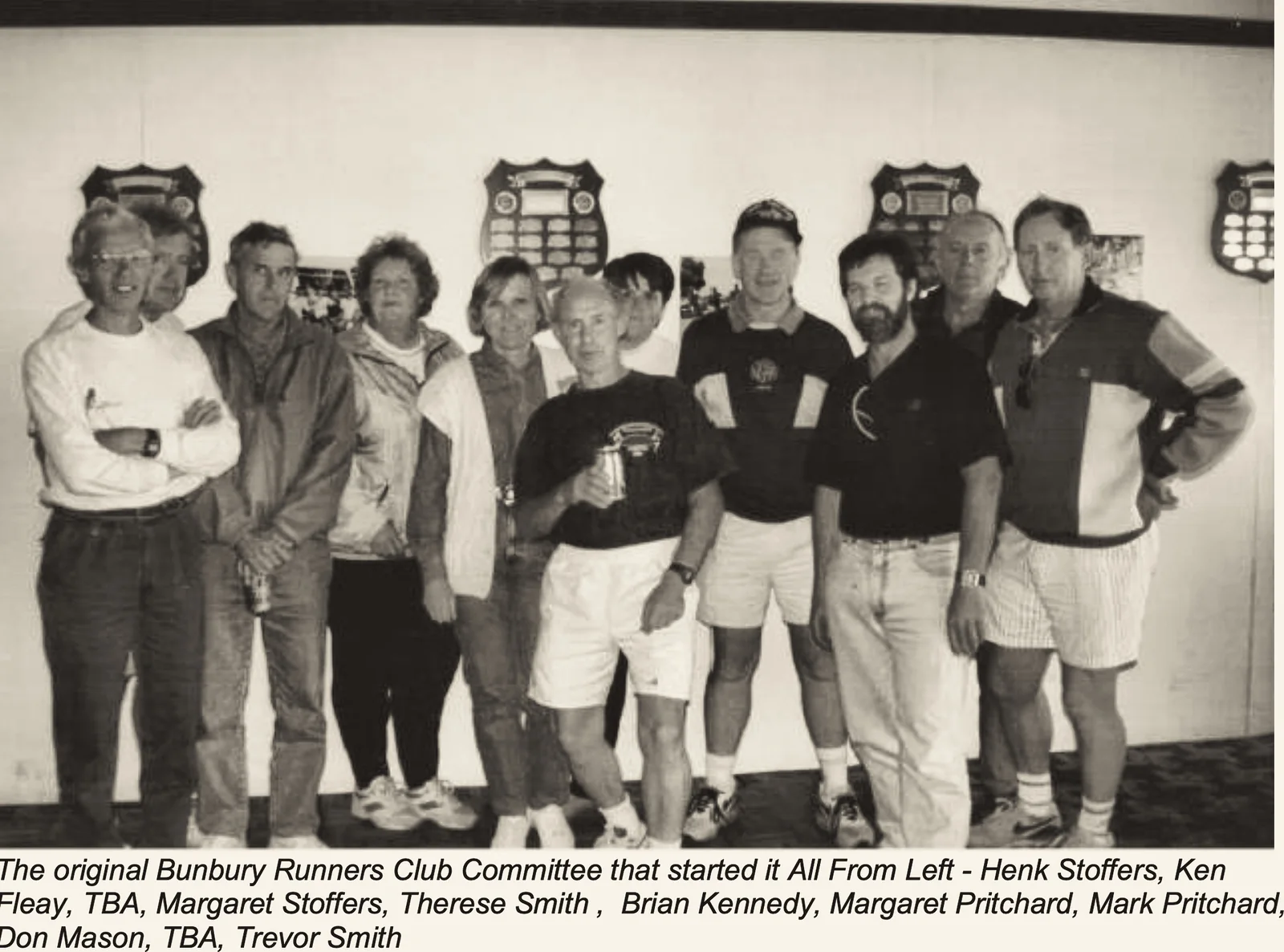
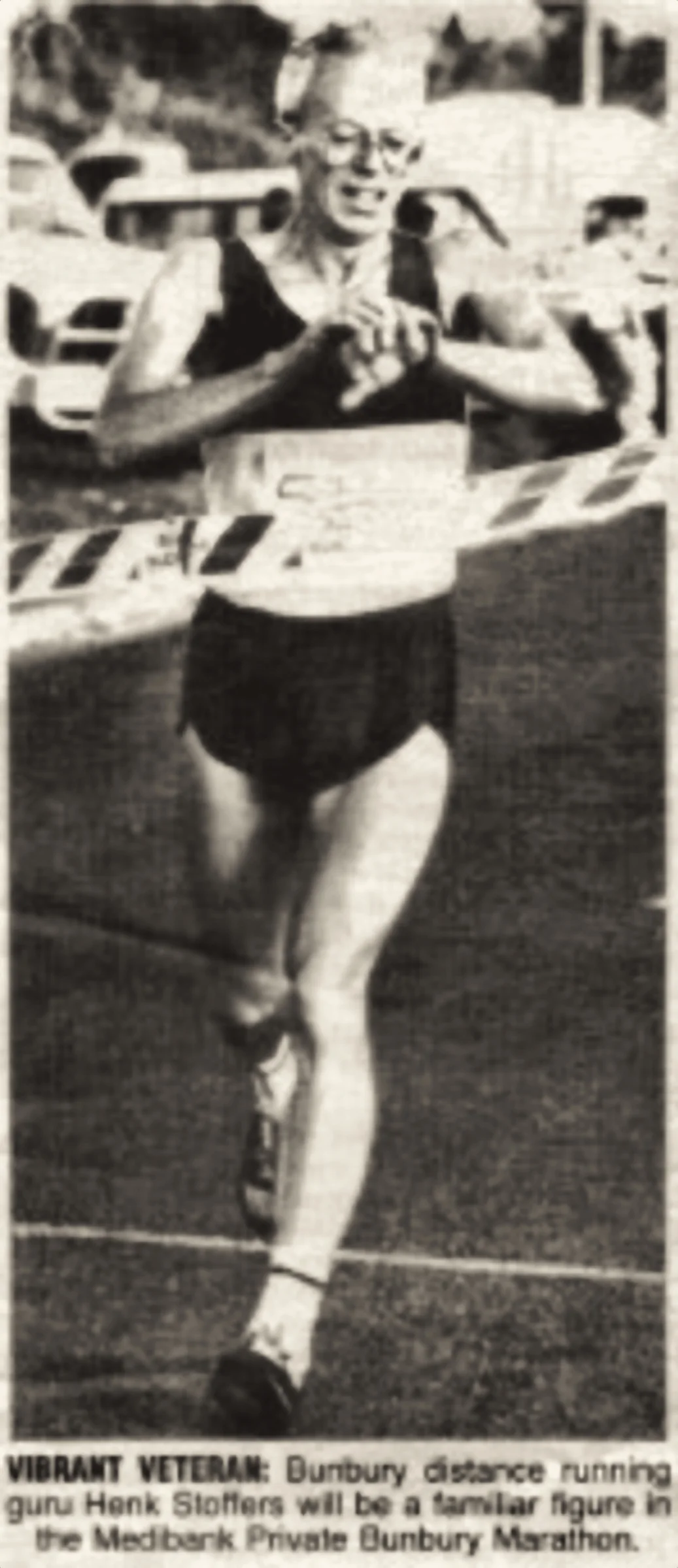
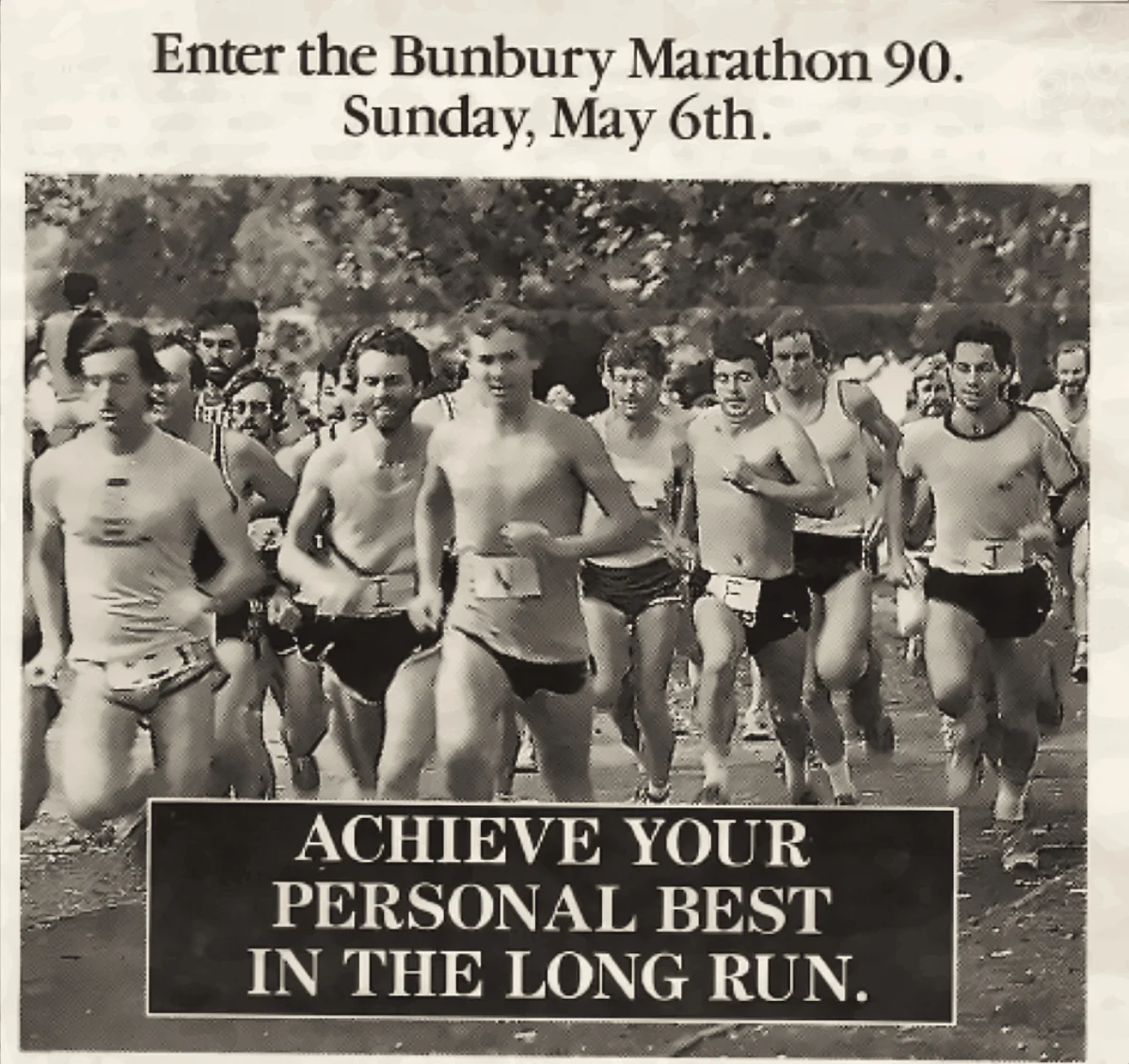
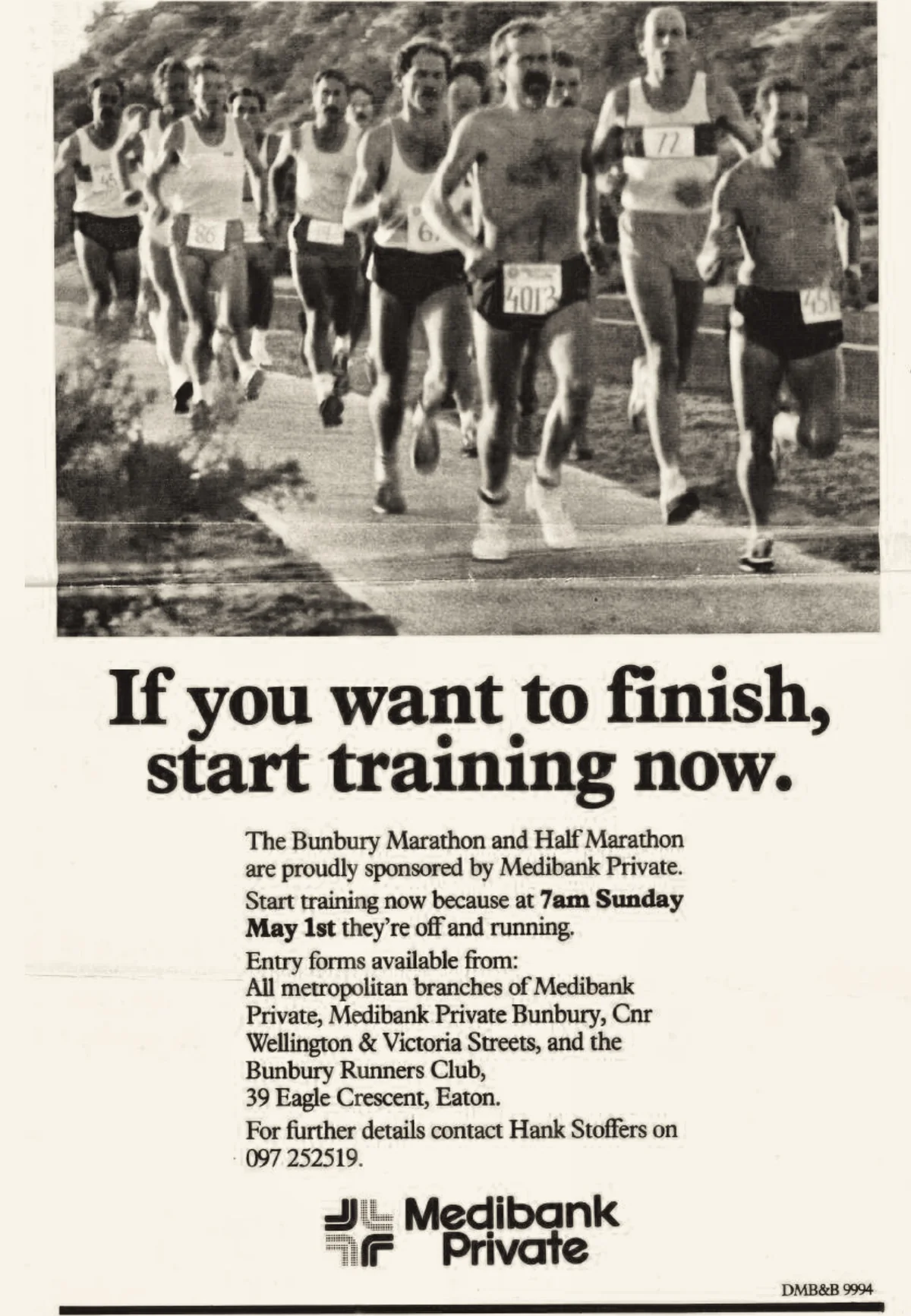
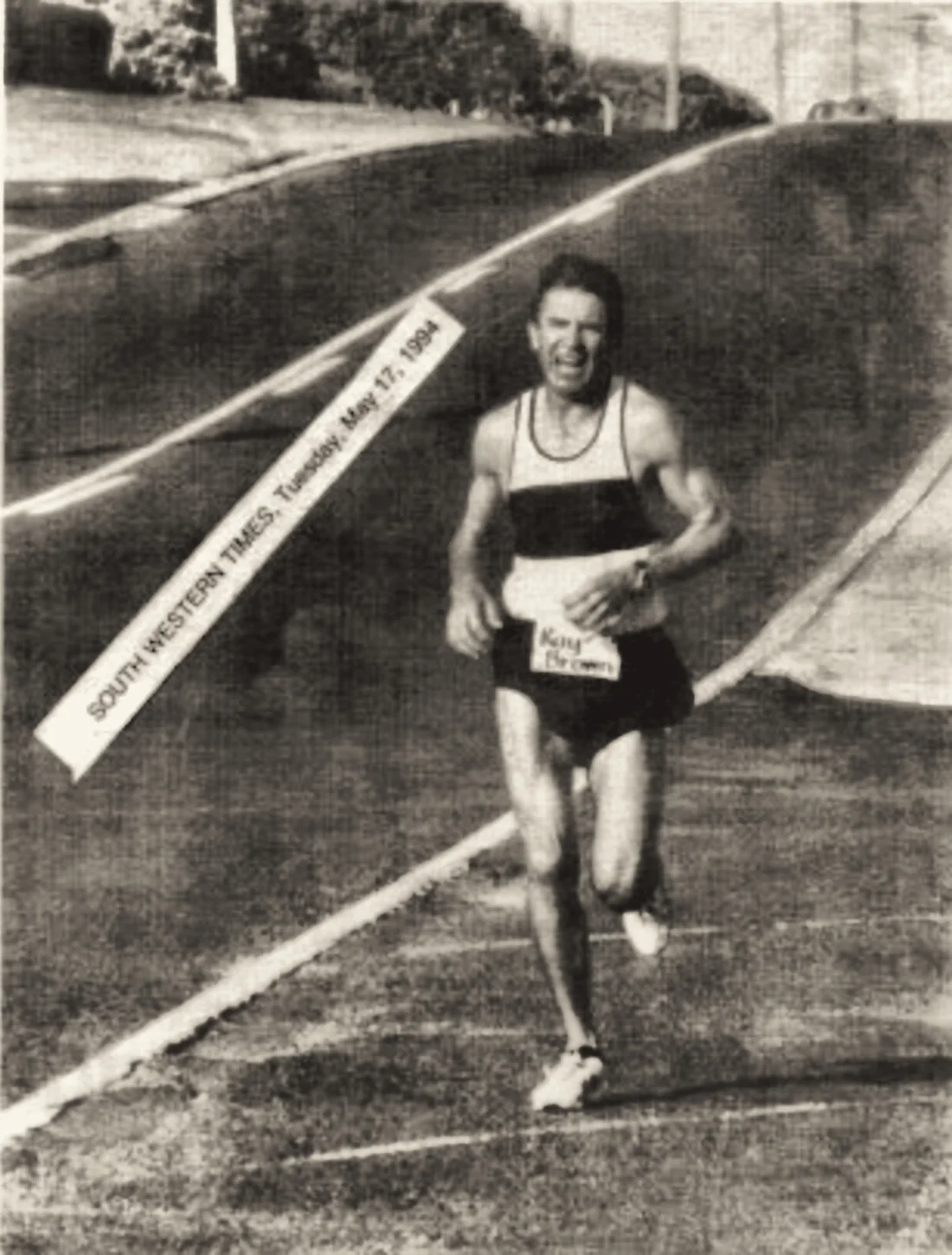
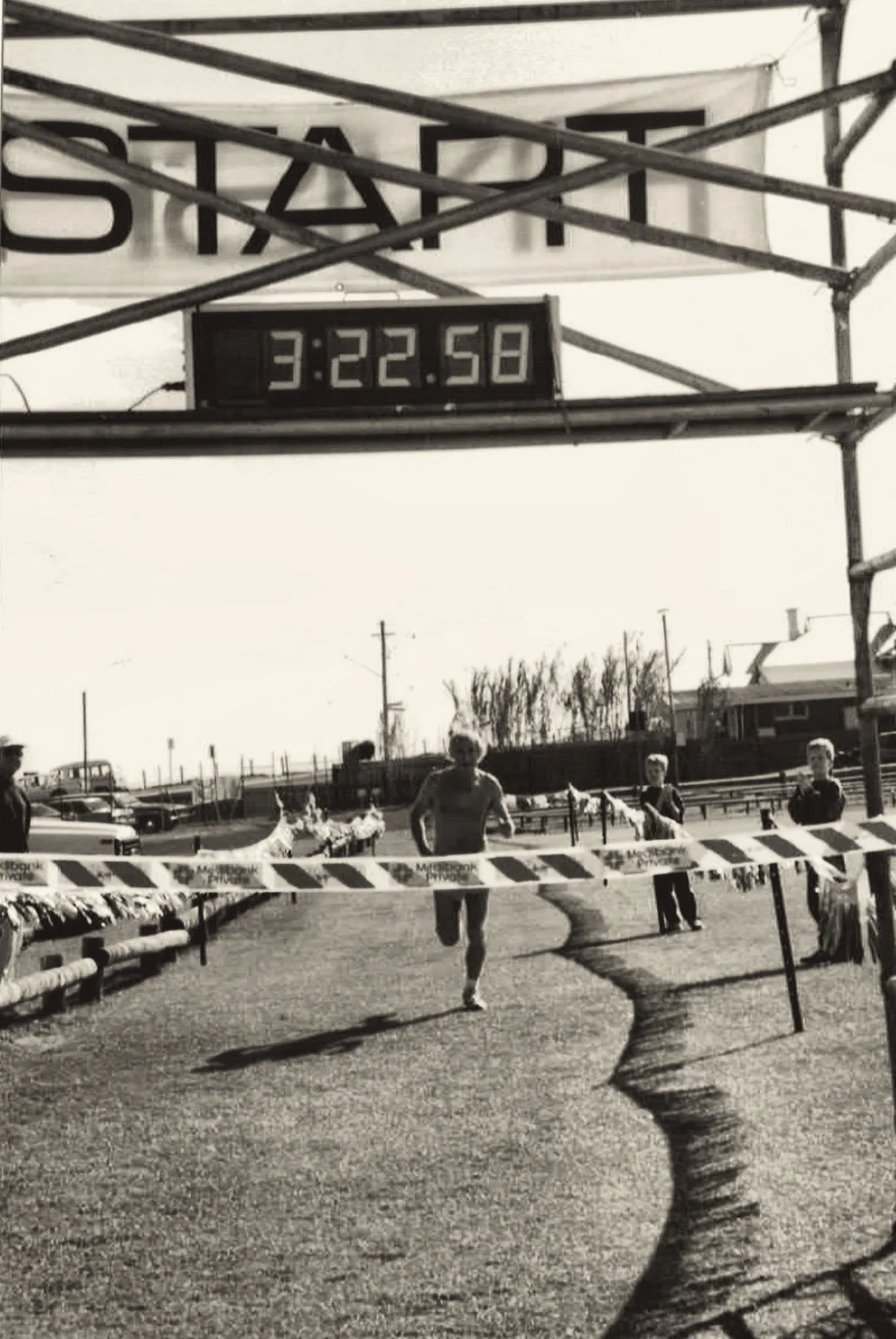
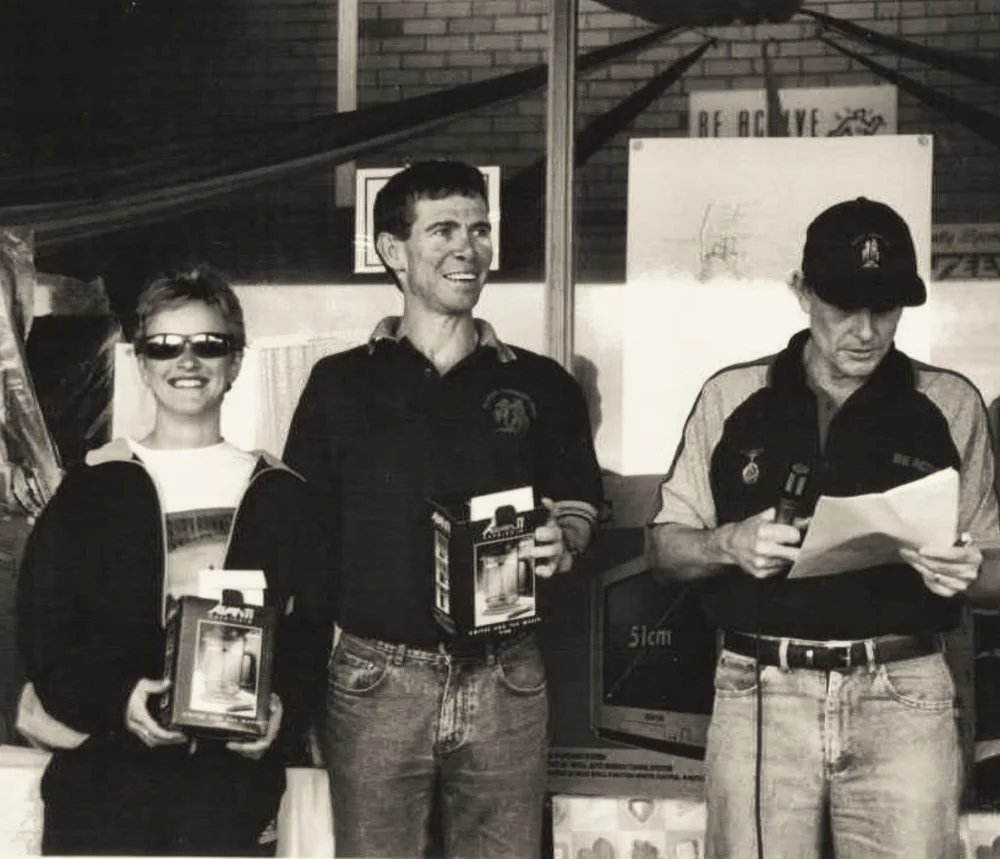
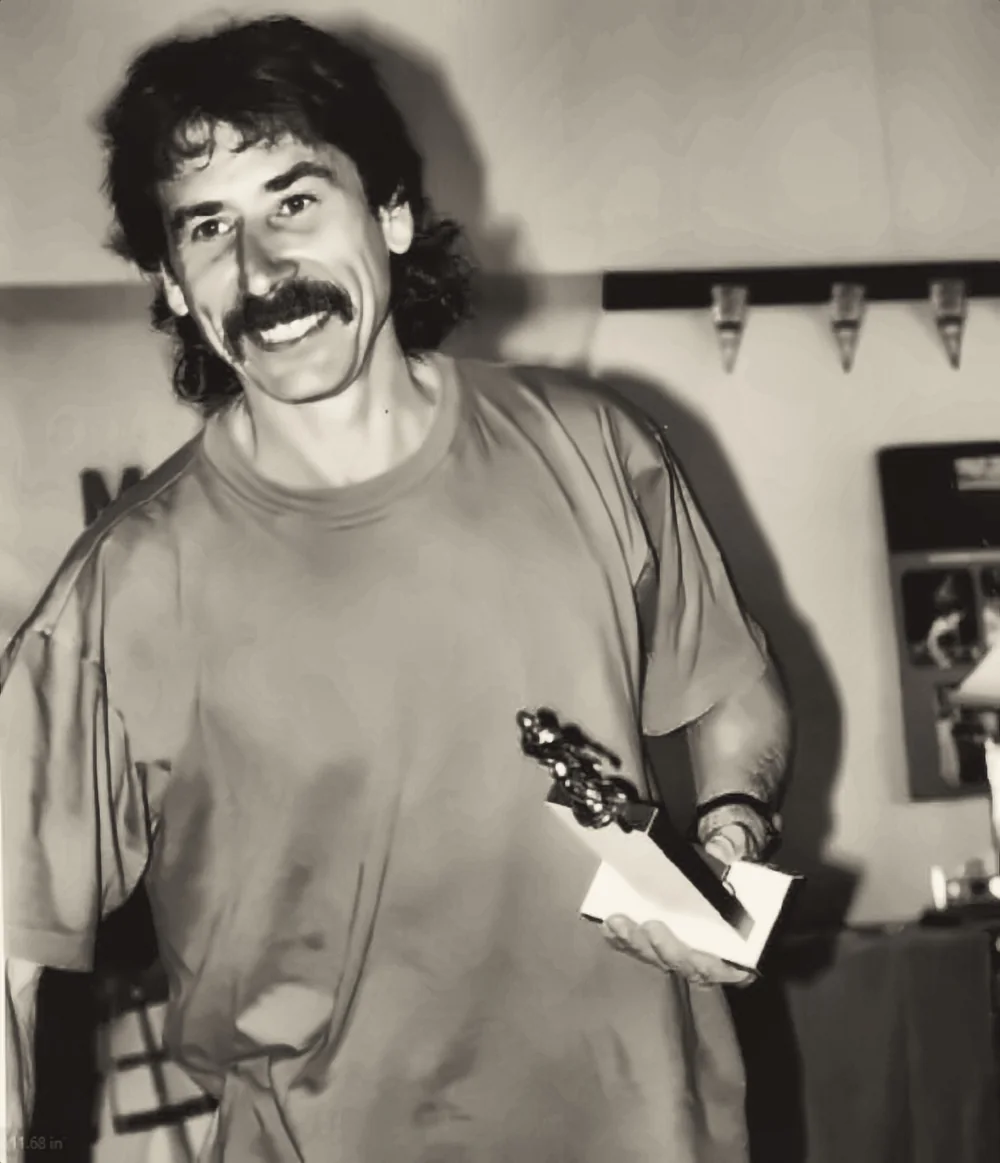
Photographs and clippings from the Bunbury Runners Club archive, compiled by Ian Gibbs. Restored 2026.
If you have photographs, race numbers, shirts or stories from any year of this event, the club wants them for the archive. They are still filling gaps in the 1980s and 90s — and two people in the committee photograph above have never been named.